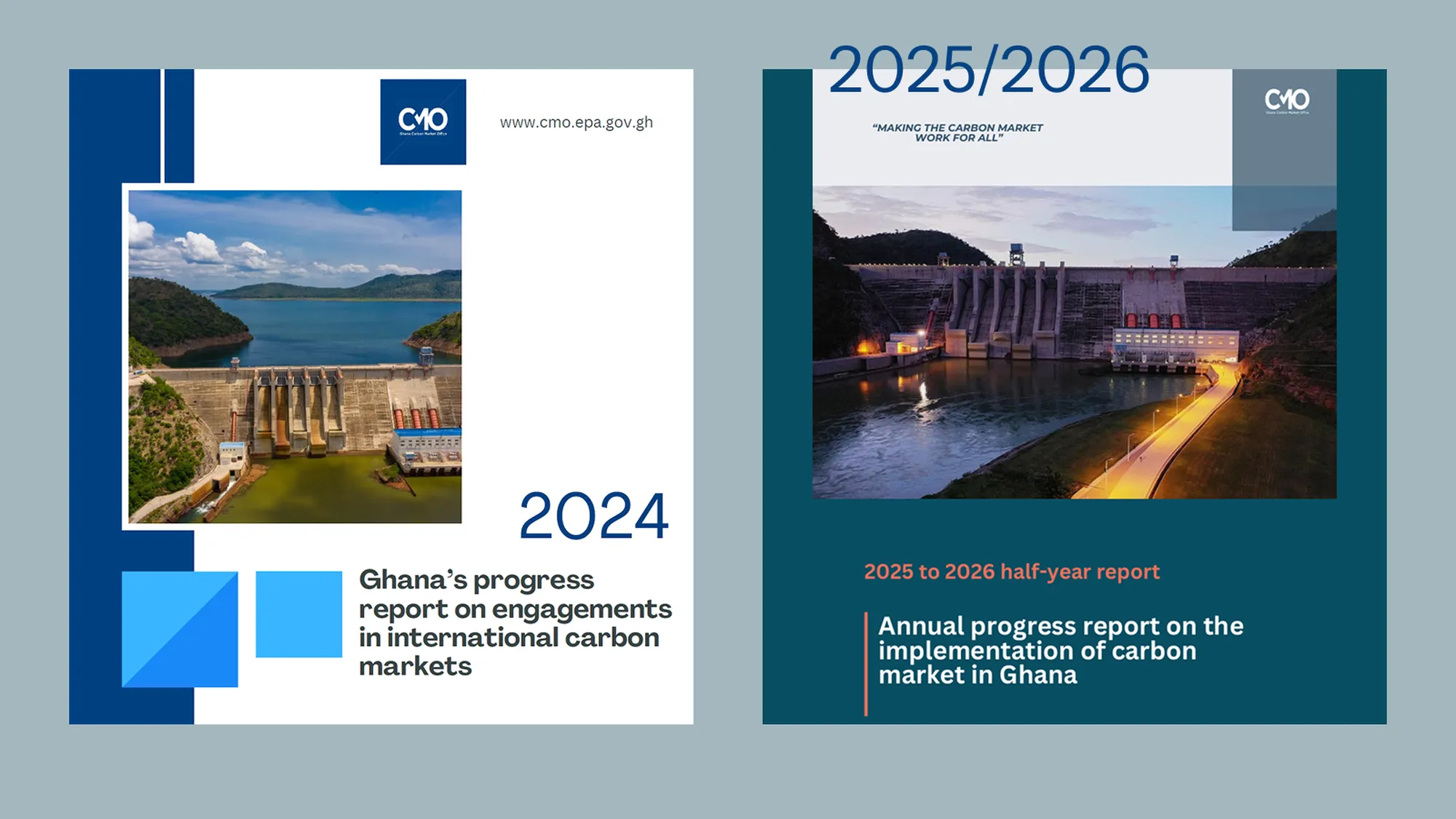
The Annual Progress Reports 2024 and 2025/26 of the Ghana Carbon Market Office highlight a remarkable achievement: Ghana has successfully progressed the policy and institutional foundations for carbon markets by putting the Article 6.2 mechanism into practice. The focus has been on the implementation, the monitoring, reporting and verification of emission reductions from specific mitigation activities, and the issuance of these reductions as ITMOs. Both reports emphasise that the partnership with Switzerland, as set out in the bilateral climate agreement, is helping Ghana to mobilise international finance and investment to achieve its climate targets. With thirteen greenhouse gas mitigation activities across various sectors to date, the KliK Foundation has become an important driver of this pioneering partnership.
In its updated Nationally Determined Contributions (NDC), Ghana has made a commitment to reduce its greenhouse gas emissions by 64 million tonnes of carbon dioxide equivalent (MtCO₂e) by 2030, with conditional actions requiring international support to achieve a reduction of around 40 MtCO₂e. These conditional actions consist of mitigation and adaptation activities and require international cooperation, private capital and additional financing. Article 6 of the Paris Agreement is being used as a one of the many climate policy mechanisms to help Ghana mobilise financing for the implementation of conditional greenhouse gas mitigation activities.
Both reports underscore the pivotal role of the cooperative approach with Switzerland. Established under the bilateral climate agreement signed in 2020, it has become one of Ghana’s most advanced collaborations under Article 6 of the Paris Agreement. The partnership is supporting the implementation of a variety of mitigation activities, helping secure domestic and international finance, and enabling Ghana to apply its regulatory framework for participation in international carbon markets in practice.
The latest Progress Report 2025/26 emphasises the growing scale of Ghana’s carbon market activities and its continued progress in implementing Article 6. During the reporting period, it comprised 91 mitigation activities with an estimated potential of around 423 million tonnes of CO₂ equivalent, and eleven authorisations.
The report highlights the “KliK track”: Through its support for thirteen mitigation activities, the KliK Foundation is making a substantial contribution to the implementation of Article 6 in Ghana. By the end of May 2026, the authorisations granted for eight of these activities will equate to a maximum amount of 9.4 million tonnes of potentially transferable ITMOs to be delivered by 2030.
The thirteen activities in the KliK Foundation’s portfolio span a variety of sectors and technologies. A particular focus is on clean cooking solutions, including programmes promoting improved and energy efficient biomass and charcoal cookstoves, as well as electric cooking technologies. Other activities support electric mobility, and cover areas such as biogas, sustainable palm oil processing, biomass energy, climate-friendly cooling technologies, and solar energy.
A major milestone documented in the 2025/26 Progress Report is Ghana’s first transfer of 11,733 mitigation outcomes (MOs) under Article 6 of the Paris Agreement, received by Switzerland in June 2025. The emission reductions originatefrom the ‘Transformative Cookstove Activity in Rural Ghana’, which distributed 60,000 improved cook stoves to rural households during the first phase. Generated between the years of 2023 and 2024, these emission reductions have become the first Article 6.2 MOs from Africa to be transferred internationally and issued as ITMOs. At the time, the transaction represented the largest single transfer of Article 6.2 credits worldwide.
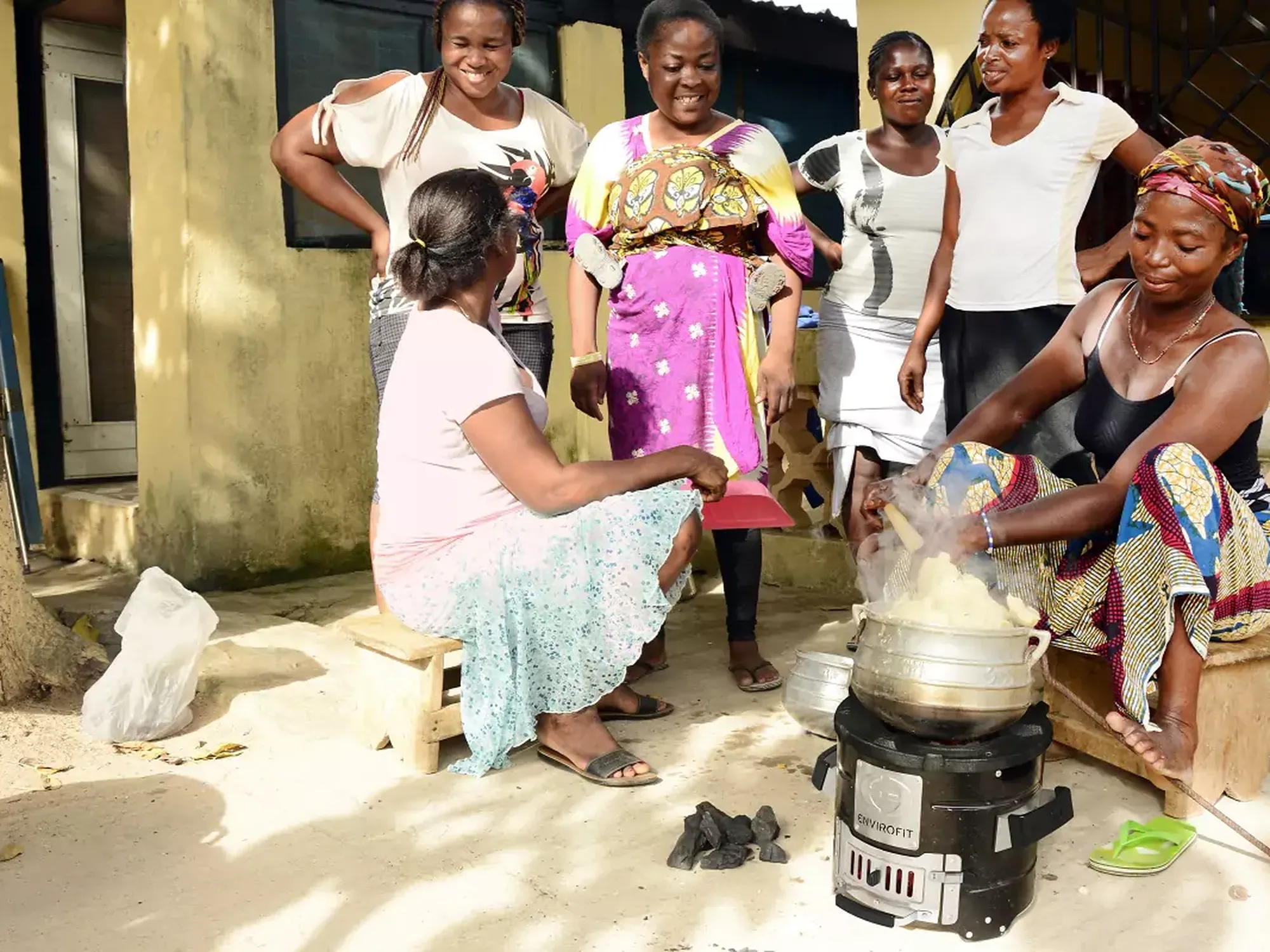
The mitigation activity 'Transformative Cookstove Activity in Rural Ghana' marks Africa’s first ITMO issuance under Paris Agreement's Article 6.2 for NDC use in July 2025.